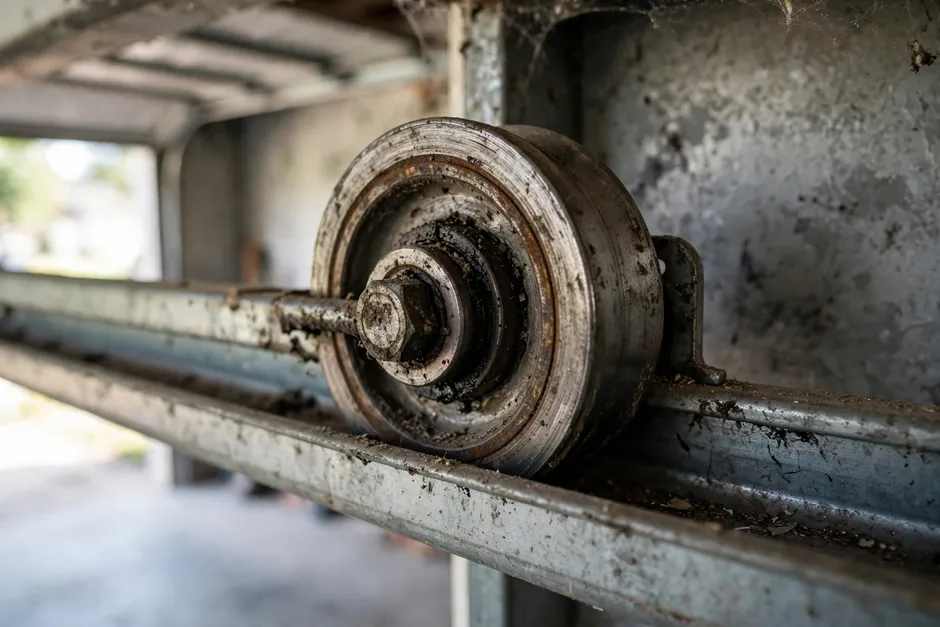
Why is my garage door so loud? In most cases, the noise comes from worn rollers, dry hinges, loose hardware, or a chain-drive opener that has gotten louder with age. A healthy garage door runs with a low hum, not banging or grinding. This guide breaks down what each sound means, what you can safely check yourself, and when it is time to call a technician.
What do the different garage door sounds mean?
Each sound points to a different part. Squeaking usually means dry rollers or hinges that need lubricant. Grinding or scraping suggests worn rollers or a track problem. Banging or clattering can mean a broken spring, loose hardware, or a door off its track. Rattling is almost always loose bolts. And an opener that hums without moving the door usually has a stripped gear.
- Squeaking or squealing: dry rollers or hinges. Lubricate with a silicone-based garage door lubricant.
- Grinding or scraping: worn rollers, sometimes a bent track that needs professional track repair. If lubrication does not quiet it, the rollers are likely worn out, and our roller replacement service handles exactly that.
- Banging or clattering: broken spring, loose component, or door off track. Stop using the door and call.
- Rattling: loose hardware. Tighten bolts with the door closed and the opener unplugged.
- Opener hums, door does not move: stripped gear or a broken spring. Call for opener repair rather than forcing it.
Listening before you call helps the technician too. Call Hermitage Garage Door Rescue at (615) 637-1499 and tell us whether it squeaks, grinds, or bangs, and whether the noise is worse going up or coming down.
Why is my garage door louder in winter?
Cold weather is rough on garage doors. Steel contracts in a cold snap, lubricant thickens so rollers drag instead of gliding, and older plastic parts turn brittle. A door that ran quietly in October can start banging or grinding by January, and winter is also when torsion springs snap most often.
If your door gets noticeably louder on the coldest mornings and quiets down by afternoon, temperature is the likely culprit, and a tune-up with fresh lubricant usually settles it. If the noise stays constant through the day, something is wearing out and is worth a look before it fails.
Can humidity make a garage door noisy?
Yes. Hermitage mornings run humid, and moisture invites rust on springs, cables, hinges, and roller stems. Rust creates friction and stress on the metal, which shows up as squeaking and grinding first, and it shortens the life of the parts if it goes unchecked.
This is one reason regular lubrication matters more here than in drier climates. A light coat of silicone-based lubricant on hinges and rollers a couple of times a year keeps rust from getting a foothold, a point Clopay's maintenance tips make as well. Homeowners in shaded, tree-lined areas like Tulip Grove and Villages of Riverwood tend to notice rust a little earlier, since morning moisture lingers longer.
Chain drive vs belt drive: which is quieter?
A belt-drive opener is noticeably quieter than a chain-drive opener, because the rubber belt glides along the rail instead of rattling like a bicycle chain. If a bedroom or living room sits above or beside the garage, the difference is hard to miss.
A well-maintained chain drive can be acceptable, and lubrication quiets it somewhat, but it will never match a belt drive for noise. Chamberlain's guide to opener drive types lays out the trade-offs. If your opener is the main source of the racket, an opener repair or replacement visit is the fix, not more lubricant on the door.
What can I check myself before calling?
Start with the simple stuff. With the door closed and the opener unplugged, tighten any loose bolts on the door sections and the opener rail, but do not over-tighten. Then apply a silicone-based lubricant to the rollers, hinges, and spring coils, and wipe both photo-eye lenses clean.
Run the door and listen. If the squeak is gone, you are done. If grinding continues after lubrication, the rollers are likely worn out, which is common around the 10-year mark on builder-grade plastic rollers. And if you hear banging, stop and call. That sound means something is broken or loose, and forcing the door only makes the repair bigger.
Frequently Asked Questions
Why does my garage door squeak?
Dry rollers or hinges are the usual cause. Apply a silicone-based garage door lubricant to the rollers and hinges. If the squeak returns within days, the rollers may be worn and due for replacement.
Is a loud garage door dangerous?
It can be. Grinding and banging sometimes signal a worn roller, a failing spring, or a door coming off track. If the noise started suddenly or the door moves unevenly, stop using it and call a technician.
How often should I lubricate my garage door?
Twice a year is a good rhythm in Hermitage, where humidity speeds up rust. Use a silicone-based lubricant on rollers and hinges, and wipe the photo-eye lenses clean at the same time.
Which is quieter, a chain-drive or belt-drive opener?
Belt drive, by a clear margin. The belt glides along the rail while a chain rattles. If noise is your main complaint and the opener is old, a belt-drive replacement is worth considering.
Why does my garage door get louder in cold weather?
Steel contracts, lubricant thickens, and old plastic parts get brittle in a cold snap. Doors that are quiet in fall often bang or grind in January. Fresh lubricant usually helps; constant noise means something is wearing out.